
A Week in Paradise: Discovering Kos on an Epic 7-Day Road Trip
The Kos Road Trip You’ve Been Dreaming Of
There’s something special about a Greek island road trip. The freedom of it. One minute you’re driving through olive groves, the next you’re pulling up at a beach that nobody on your flight knew existed. That’s exactly what a week in Kos gives you — an island that’s small enough to explore thoroughly in seven days but big enough to keep surprising you.
With a hire car, Kos transforms from another package holiday destination into a proper adventure. You’re not checking bus timetables or negotiating taxi prices. You’re just driving, stopping when something catches your eye, and discovering the real Kos that most visitors never see.
Here’s your complete week-long road trip plan.
Day 1: Kos Town — Your Road Trip Basecamp
Start your adventure in Kos Town. Pick up your hire car from the airport (the rental desks are literally outside arrivals — couldn’t be easier) and drive to your accommodation to drop off bags.
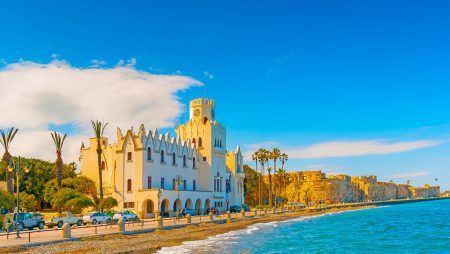
Kos Town is the island’s heart and your first stop should be the Castle of the Knights. This 15th-century fortress sits right on the harbour and has survived centuries of history. Walk the walls, climb the towers, and get your bearings with views over the whole town.
From there, head to the Ancient Agora. It’s a short walk from the castle and the ruins here give you a genuine feel for what ancient Kos was like. The Romans built this marketplace and you can still make out the columns, the shops, and the public spaces where locals would have gathered two thousand years ago.
Don’t leave town without seeing the Tree of Hippocrates. It’s in the main square — a massive plane tree that’s been growing here for over 2,400 years. Whether you believe the legends about Hippocrates teaching beneath it or not, it’s an incredible thing to see.
For dinner, drive along the harbour front and find somewhere for fresh fish and tzatziki. You’re on holiday — start as you mean to go on.
Day 2: The Southern Coast — Beaches You’ll Actually Remember
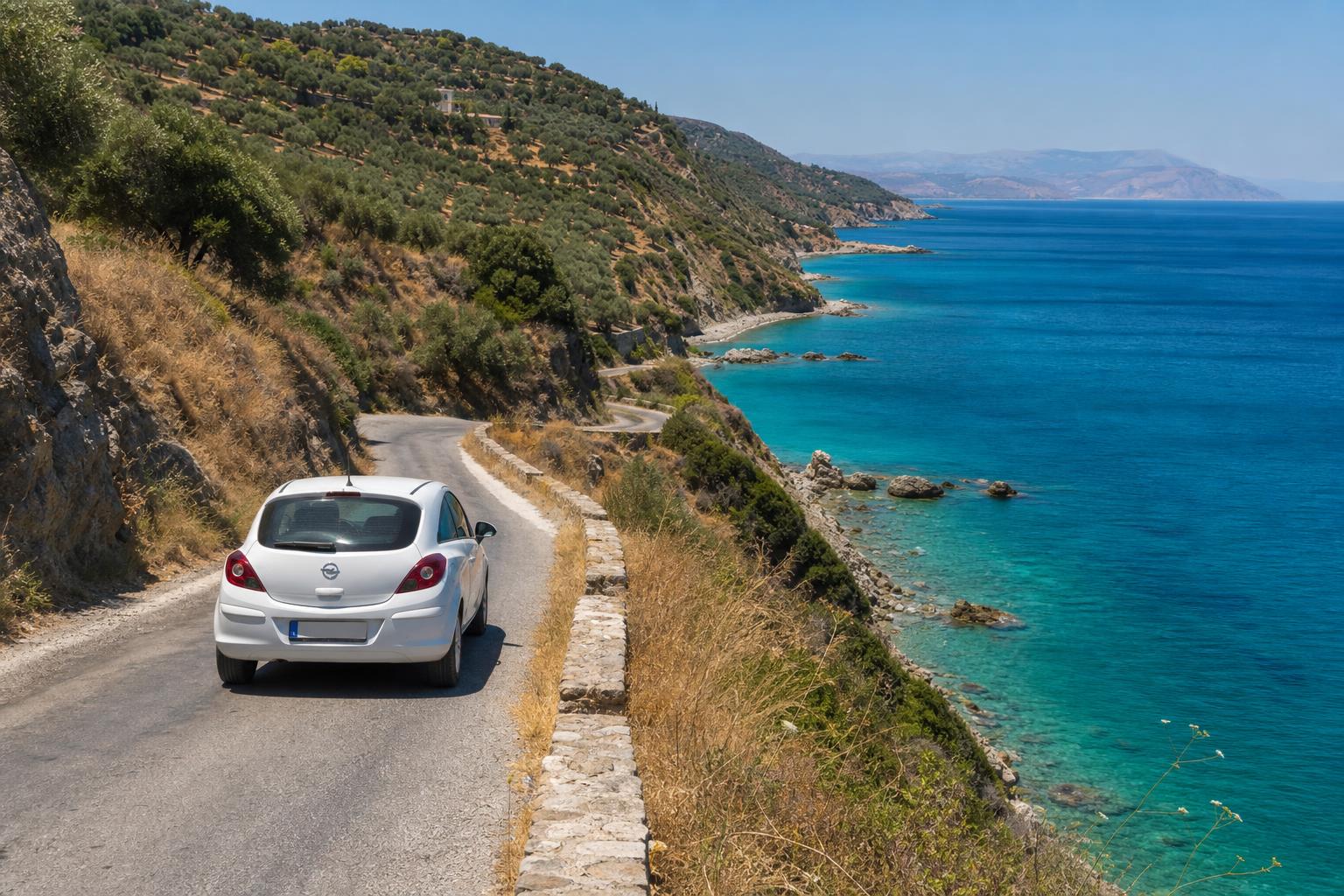
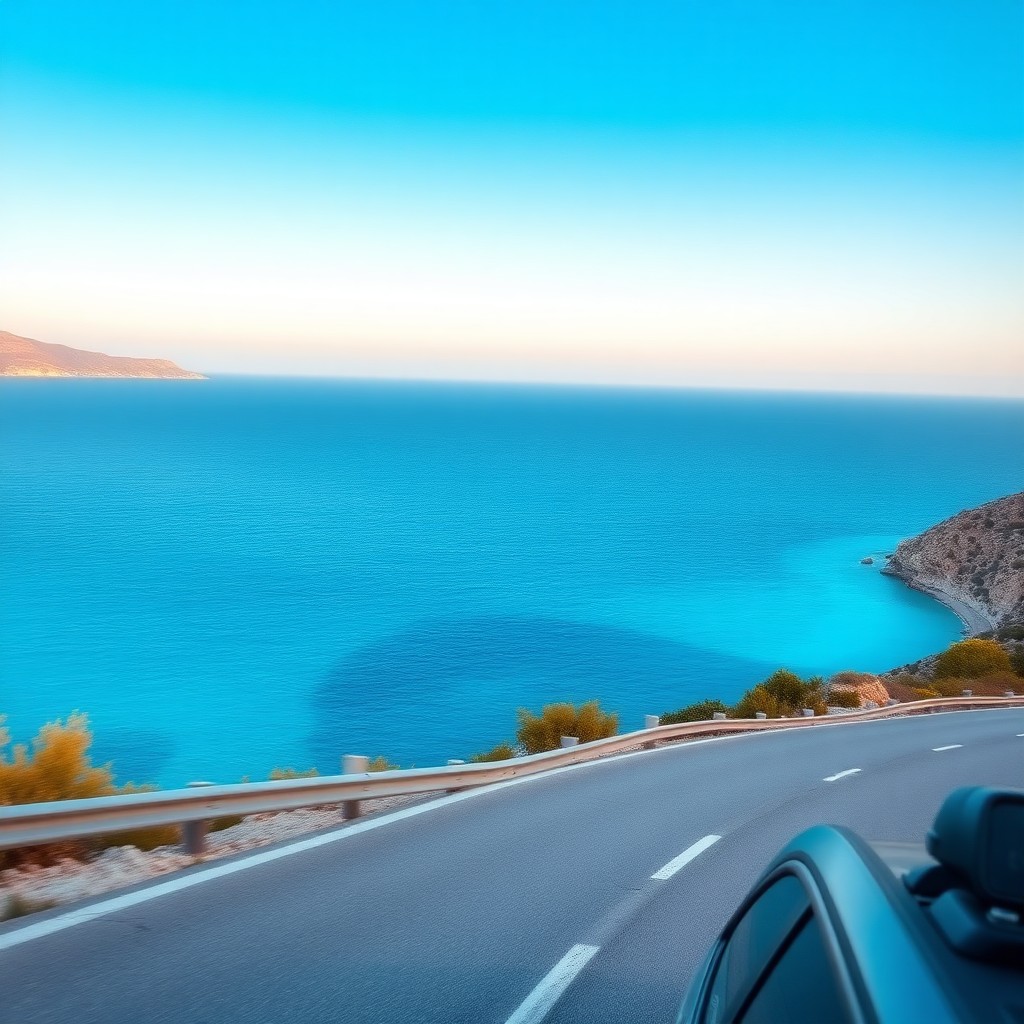
Today, head south. The coastal road from Kos Town towards Kefalos is one of the best drives on the island — winding along the cliffs with the Aegean stretching out below you.
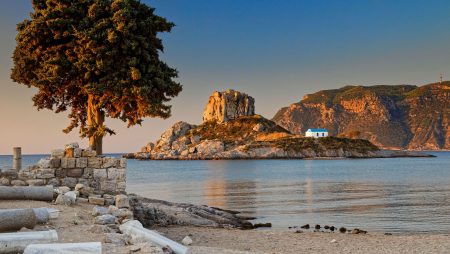
Your first stop should be Paradise Beach. Yes, it’s called that, and yes, it lives up to the name. The name actually comes from a nearby restaurant rather than any official designation, but the soft white sand and crystal-clear water make it feel appropriately named. There’s a beach bar here if you need refreshments, and the water is shallow enough for kids to play safely.
If Paradise Beach is too busy (it can get popular in afternoon), carry on a few kilometres further. There are smaller, quieter beaches along this stretch that most visitors never find. That’s the beauty of having your own car — you can keep driving until you find your own private patch of sand.
In the afternoon, continue towards Kefalos. The village is charming in a rugged, traditional way — white buildings, narrow streets, and a main beach (called Camel Beach by locals) that’s got a much more authentic Greek feel than the resort beaches near Kos Town.
Day 3: Zia and the Mountains
Time to head inland. The drive from Kos Town to Zia takes you up into the mountains of central Kos, and the road gets progressively more scenic as you climb.
Zia is the village everyone talks about for sunset, and for good reason. The views from up here are absolutely stunning — on a clear day you can see all the way to the Turkish coast. The village itself is a maze of narrow streets packed with craft shops selling local weaving, pottery, and souvenirs. It’s touristy, yes, but in a charming, harmless way.
Get to Zia early afternoon, have a long lunch at one of the tavernas overlooking the valley, then explore the shops while you wait for sunset. The square gets packed at golden hour but there’s a reason — the sunset views from here are genuinely world-class.
If you want to escape the crowds, there are walking trails that lead out of Zia into the mountains. The path to the peak of Mount Dikeos (the highest point on the island) starts near here. It’s a proper hike (about 3-4 hours round trip) but the views from the top are incredible.
Day 4: The North Coast — Where the Locals Go
Today, explore the north of Kos. This is the quieter, more laid-back side of the island — less resort, more real Greek life.
Start with a drive through the olive groves that dominate this part of the island. Kos produces a surprising amount of olive oil and you’ll see groves stretching as far as you can see. The road winds through small villages where life seems to move at a different pace.
Tigaki is your main destination — a long, sweeping beach that locals actually prefer to the more famous spots. It’s less crowded than Paradise or Camel Beach, the water is beautifully clear, and there’s a decent taverna right on the sand. Spend the afternoon here.
If you want to explore further, carry on past Tigaki towards the tip of the island. There’s a salt marsh area that’s interesting for birdlife, and some small beaches that are practically deserted even in August.
Day 5: Antimachia and the East Coast
Head east today, towards Antimachia and beyond. The drive takes you through the heart of the island’s agricultural area and past some genuinely untouched villages.
Antimachia is famous for its windmill — it’s one of the most photographed spots on Kos and worth a quick stop. The village itself is sleepy and traditional, with a small kastro (fortress) above the main area that has impressive 360-degree views.
From Antimachia, continue to Mastichari. This is a proper working harbour, not a tourist creation, and the fish tavernas here serve some of the freshest seafood on the island. Have lunch right on the waterfront — you can’t get more local than this.
In the afternoon, either relax on Mastichari’s small beach or drive a few kilometres south to the next beach along. The whole east coast has a different feel from the south — less dramatic but more relaxed.
Day 6: Kardamena and the Hidden Gems
Kardamena is the main resort town on the south side of Kos and gets a bad press from some travel writers. The reality is more nuanced — yes, it’s busy in summer, yes, it’s focused on British package tourists, but there’s also a genuine Greek town underneath the resorts if you look for it.
The harbour area is actually really pleasant. There’s a small ancient site (the remnants of a basilica and some Roman baths), and the waterfront has some decent restaurants. It’s also the place to come for nightlife if that’s your thing — there’s a decent strip of bars and clubs.
But the real highlight today is Limnionas Beach, a hidden cove on the southeastern coast. Getting here involves a short drive down a rough track, which keeps the crowds away. The beach is small and rocky in places but the water is unbelievably clear. It’s the perfect end-of-trip reward.
Day 7: Last Day — Your Choice
Your final day. How you spend it depends on what you’ve missed and what kind of holiday you want.
If you haven’t been to the Asklepion yet, it’s worth a visit. It’s the most impressive archaeological site on the island — an ancient healing centre with panoramic views. If you’ve already seen it, maybe revisit your favourite beach from the week.
Alternatively, just drive. That’s the beauty of having a hire car — no schedule, no pressure. Find a beach you’ve never heard of, stop at a taverna that catches your eye, take a wrong turn and see where it leads.
Before you head to the airport for your flight home, remember to fill up the car. The fuel policy is almost always “full to full” — you get it with a full tank, you return it with a full tank. If you don’t fill up before you get to the airport area, you’ll pay premium prices for them to do it.
Road Trip Essentials for Kos
- Download offline Google Maps — the signal can be patchy in the mountains and you don’t want to be relying on data
- Fill up before remote days — there are plenty of petrol stations in town but fewer out west
- Watch for speed cameras — they’re real and fines are automated. The limits are clearly marked
- Keep small change for parking — Kos Town parking costs a few euros per hour in summer
- Start early in summer — the midday heat is brutal. Morning and late afternoon are better for driving and sightseeing
FAQ: Kos Road Trip
Is driving in Kos difficult?
Not at all. The main roads are good, signposting is clear (in Greek and English), and traffic is light. The only challenges are narrow mountain roads in places — take your time and be prepared to reverse if you meet another car.
Do I need a 4×4?
A standard car is fine for 95% of roads on Kos. You only need a 4×4 if you’re planning serious off-road adventures, which most visitors don’t bother with.
Can I visit Kalymnos on this trip?
Absolutely. If you want to add a day trip, the ferry from Mastichari takes about 30 minutes and you can drive your hire car onto the ferry.
What’s the best beach on the island?
For us, it’s the small coves around Kefalos and Limnionas. Less crowded, more beautiful, and you need a car to reach them easily.
Is it expensive to hire a car for a week? The cost depends on your dates, driver details and vehicle category. Compare the full weekly quote, including any extras, then budget separately for fuel and parking.
Make It Happen
A seven-day road trip is the best way to experience Kos. You’ve got the freedom to discover hidden beaches, explore mountain villages, eat when and where you want, and create your own adventure.
Compare car hire offers for your dates and read the selected supplier’s full price, deposit, excess, extras and cancellation terms before booking. Your Kos road trip starts here.
Ready to explore Kos at your own pace? Book your car hire at koscarhire.com and get the most out of your island visit.