
Kos vs Rhodes — Which Greek Island is Better for Car Hire?
It comes up all the time. Someone’s planning a Greek island holiday, they’ve narrowed it down to Kos or Rhodes, and they can’t decide. Both are in the Dodecanese, both have sun and history and beaches, both have flights from most UK and European airports in summer. So which one is better for a car hire holiday?
This isn’t one of those wishy-washy “they’re both great, it depends” pieces. We’re going to give you actual information so you can make a proper decision based on what kind of traveller you are.
Size and Scale: How Much Driving Are You Signing Up For?
The single biggest practical difference between Kos and Rhodes is size. Kos is roughly 290 square kilometres. Rhodes is around 1,400 square kilometres — nearly five times bigger. What that means in real terms:
In Kos, you can drive from one end of the island to the other in about 90 minutes. From Kos Town in the east to Kefalos at the western tip is around 45km. No part of the island is more than 35 minutes from anywhere else. You can base yourself centrally and reach any beach or village within 45 minutes, comfortably.
In Rhodes, a full north-to-south drive takes 2-3 hours. The island is long and varied — Rhodes Town in the north, Faliraki, Lindos, Gennadi, all the way down to Prasonisi at the southern tip. Day trips from the main resort areas often involve 45-60 minutes each way. That’s not a dealbreaker — Rhodes has enough to justify the driving — but it’s something you need to account for when planning your days. You’re not going to do Rhodes Town, Lindos, and a beach all in the same afternoon without feeling rushed.
If you want to maximise time on the beach or in the taverna rather than behind the wheel, Kos is the more efficient choice. If you enjoy driving as part of the experience and want a bigger island to explore, Rhodes rewards the effort.
Road Quality and Driving Experience
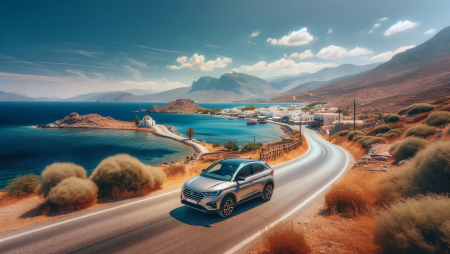
Both islands have perfectly driveable roads for standard hire cars. Neither requires specialist skills or 4WD for the main attractions.
Rhodes has better main road infrastructure — the coastal road down the east side is proper dual carriageway in stretches, fast and well-maintained. The west coast road is also good. However, Rhodes Town itself has significant traffic in summer, and roads around Faliraki get congested. Roundabouts and junctions can be busy with coaches and tourist traffic, which makes driving there slightly more stressful if you’re not used to it.
Kos’s main road runs along the north coast from Kos Town to Mastichari, then cuts across and west to Kefalos. The condition is generally good — some sections better than others, a few rural roads are rougher — but nothing problematic. Kos Town can get a bit congested around the harbour area, but nothing like Rhodes Town. Overall, Kos feels more relaxed to drive. Less traffic, shorter distances, less pressure.
Both islands have winding mountain routes. Kos’s road up to Zia has twisting switchbacks through pine forest — perfectly fine for any hire car, just slower. Rhodes has similar roads in the interior. Neither island’s mountain routes are genuinely challenging; they’re just scenic and need a bit more attention than the coastal roads.
Beaches: Which Island Wins?
This is genuinely close. Both islands have excellent beaches, but they’re different in character.
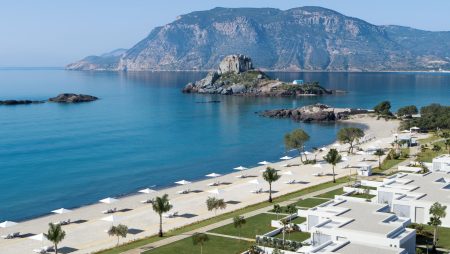
Kos beaches tend to be longer, flatter, and sandier. Tigaki (9km of golden sand), Mastichari, Kefalos beach — these are proper beach-holiday beaches with facilities, calm water, and easy parking. The water on Kos’s north coast is particularly calm because it’s sheltered by the nearby Turkish coast. Great for families, for swimming, for spending all day without a care. Access is usually easy — you drive to a car park, walk 2 minutes, you’re on the beach.
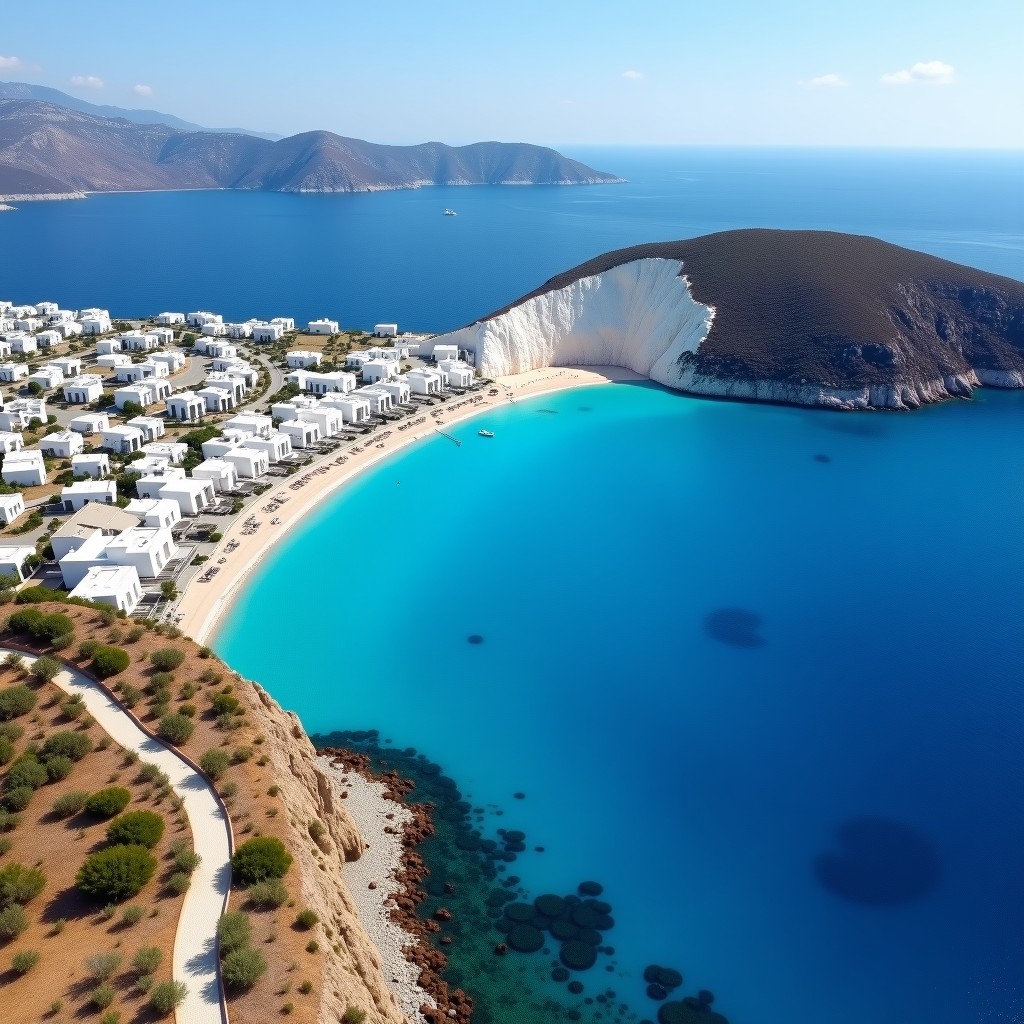
Rhodes offers more variety. The east coast has long sandy beaches — Faliraki, Tsambika, Agathi, Kalithea — that are genuinely excellent. The west coast has more dramatic, pebbly coves and windier conditions (the west coast catches the meltemi wind in summer). Some of the best beaches on Rhodes (Traganou, Stegna, Anthony Quinn Bay) are tucked away and require a walk from the road, or a very narrow access track.
If you want reliably good, accessible beach days: Kos. If you want variety and the chance to discover genuinely different types of beach: Rhodes. Neither island will leave you disappointed if beaches are your priority.
Things to See: History, Villages, Attractions
This is where Rhodes pulls well clear. It’s simply a bigger island with more significant attractions.
Rhodes Town’s Medieval Old Town is one of the best-preserved medieval settlements in Europe — a UNESCO World Heritage Site and genuinely one of the most impressive things you can see in Greece. The Palace of the Grand Master, the Street of the Knights, the mosques and churches and Ottoman baths all crammed into a walled city that still functions as a proper lived-in place. It’s extraordinary. Then there’s Lindos, where the ancient Acropolis sits on a cliff above a traditional white village and a perfect crescent beach. The Valley of the Butterflies. The ruins of ancient Kamiros. Rhodes has enough major sights to fill a fortnight.
Kos has its own history — the Roman Odeon, the Castle of the Knights in Kos Town harbour, the Asklepion (the ancient healing sanctuary dedicated to Asclepius, birthplace of Hippocrates), the castle ruins at Kefalos and Antimachia — and the mountain village experience in Zia is genuinely wonderful. But the scale is different. A day in Kos Town ticks off most of the major historical sites. Rhodes Town alone could occupy two or three days.
If world-class archaeology and medieval history are high on your list, Rhodes is the destination. If you want a good mix of history, beaches, and mountain villages without feeling overwhelmed, Kos delivers more at a more manageable pace.
Mountain Villages: Kos Has the Edge
This is where Kos really shines. The mountain villages of Zia, Lagoudi, and Asfendiou offer some of the most authentic Greek island experiences you’ll find anywhere — traditional tavernas, stunning sunset views across the whole island to the Turkish coast, winding roads through pine forests, and a genuine sense of getting off the tourist trail.
The drive to Zia from anywhere on the north coast is one of the most scenic half-hours you can spend behind a wheel in the Aegean. You leave the flat coastal plain behind, climb up through olive groves and then pine forest, and arrive in a village perched on the mountainside with views that make you understand why ancient Greeks believed the gods lived in high places.
Rhodes has mountain villages too — Embona is the most famous, known for its local wine — but they don’t quite capture the same magic, partly because the drive from the coast takes longer and partly because Rhodes Town itself is such a draw that the interior gets relatively few visitors. For the classic Greek island experience of driving from beach to mountain village to sunset, Kos is better.
Car Hire Costs: What to Actually Expect
Car hire is widely available in both islands, with major companies at both airports and in the main resort towns.
Kos tends to be slightly cheaper on average. In peak summer, economy cars (Fiat 500, VW Polo size) run approximately €35-50 per day including basic insurance. In May, June, September, October, you’re looking at €25-35 per day. Fuel in Greece currently runs around €1.80-2.00 per litre. A week of typical island driving in Kos (maybe 400-600km total) will cost you €30-50 in fuel on top of the rental.
Rhodes prices are similar but can run €5-10 per day higher in peak season, partly due to higher demand. If you’re driving significantly more kilometres (which you will in Rhodes due to the island’s size), fuel costs will also be noticeably higher.
One practical advantage of Kos: the airport is smaller and the whole arrival process is faster. You can land, pick up your hire car, and be at Mastichari beach within an hour of touchdown. Rhodes Airport is a major hub with considerably more traffic — allow more time for the whole process.
Which Type of Traveller Suits Which Island?
Choose Kos if you: want to spend most of your time at the beach with some day trips; are travelling with young children; prefer a relaxed, unhurried pace; want to cover the island’s highlights without long drives; are on a tighter budget; or are visiting for 7 nights or less and want to actually see everything without rushing.
Choose Rhodes if you: are deeply interested in history and archaeology; want a larger island with more varied landscapes and a mix of experiences; are happy to spend 30-60 minutes driving to reach the day’s destination; are staying for 10+ nights and want plenty to do; or specifically want to see the Medieval Old Town, which has no equivalent anywhere in the Dodecanese.
Both islands suit independent travellers with hire cars well — that’s why they’re perennially popular. Neither will leave you feeling you made the wrong choice if you go in with realistic expectations.
The Verdict
For a pure car hire holiday — maximum flexibility, minimum effort, great beaches, and a relaxed island atmosphere — Kos edges Rhodes. The distances are shorter, the driving is easier, nothing feels rushed, and you can see the whole island in a week without feeling like you spent it all in the car.
For a more adventurous trip with major historical sights, a genuinely extraordinary Old Town, and more varied landscapes to explore — Rhodes wins, and wins comfortably.
The honest truth is that both islands are brilliant, and choosing between them is a good problem to have. But if you’ve only got a week and you want a holiday that feels genuinely relaxed and explorative without long drives between the highlights, Kos is the better call.
Start planning your Kos hire car trip at koscarhire.com — or compare car hire at Kos Airport directly.
Frequently Asked Questions
Which island is bigger, Kos or Rhodes?
Rhodes is significantly bigger — about 1,400 km² compared to Kos at 290 km². Driving across Rhodes takes 2-3 hours; across Kos about 90 minutes.
Is car hire more expensive in Rhodes or Kos?
Car hire is slightly more expensive in Rhodes, typically €5-10 per day more than Kos in peak season. Factor in higher fuel costs too due to longer distances.
Which island has better beaches?
Both have excellent beaches. Kos tends to have longer, sandier, more accessible beaches. Rhodes offers more variety but some of the best beaches involve longer walks from the road.
Can I do a day trip between Kos and Rhodes?
No direct ferry runs between Kos and Rhodes — you’d need to go via other islands, which takes many hours. They operate as completely separate destinations.
Which island is better for families?
Kos is generally considered more family-friendly due to its calmer beaches, shorter driving distances, and more compact layout. A family can base themselves in one place and reach everything easily.
Which island has better nightlife?
Rhodes, specifically Rhodes Town’s New Town area, has a much more developed nightlife scene. Kos Town has a good bar and club strip along Nafklirou Street, but Rhodes is in a different league for late-night entertainment.