
Kos Inland Villages by Car | Kos Car Hire
Why Explore Kos Inland by Car?
Most visitors to Kos stick to the coast: Kardamena, Tigaki, Lampi, and the town of Kos itself. The beaches are great — we’ve covered the best beaches on Kos separately. But the interior of the island is where Kos reveals its real character: mountain villages untouched by package tourism, ancient plane trees that shade village squares, ceramic workshops, family tavernas serving food you won’t find within 500 metres of any beach hotel, and a landscape that shifts from olive groves to pine forest to bare volcanic rock within a 20-minute drive.
Kos is not a big island — you can drive from one end to the other in under an hour. But the interior is hilly, the roads twist through valleys and over ridges, and there’s no public transport to the villages that make Kos worth exploring beyond the sand. A hire car isn’t optional here — it’s the only way to see Zia, Pyli, Asfendiou, Lagoudi, and the mountain roads between them.
The Route: A Circular Tour of Kos Inland
The most efficient way to cover the inland villages is a circular route starting and ending in Kos Town. You can do this in half a day, or stretch it into a full day with long lunch stops and swimming detours.
Total distance: ~65 km (circular)
Driving time: 1.5 hours (pure driving, no stops)
Recommended time: Full day with stops
Road type: Paved two-lane roads throughout
Fuel: ~€6–8 for the full loop
Route: Kos Town → Asfendiou → Zia → Pyli → Antimachia → Kos Town (via the central road)
Stops Along the Route
Asfendiou — km 10
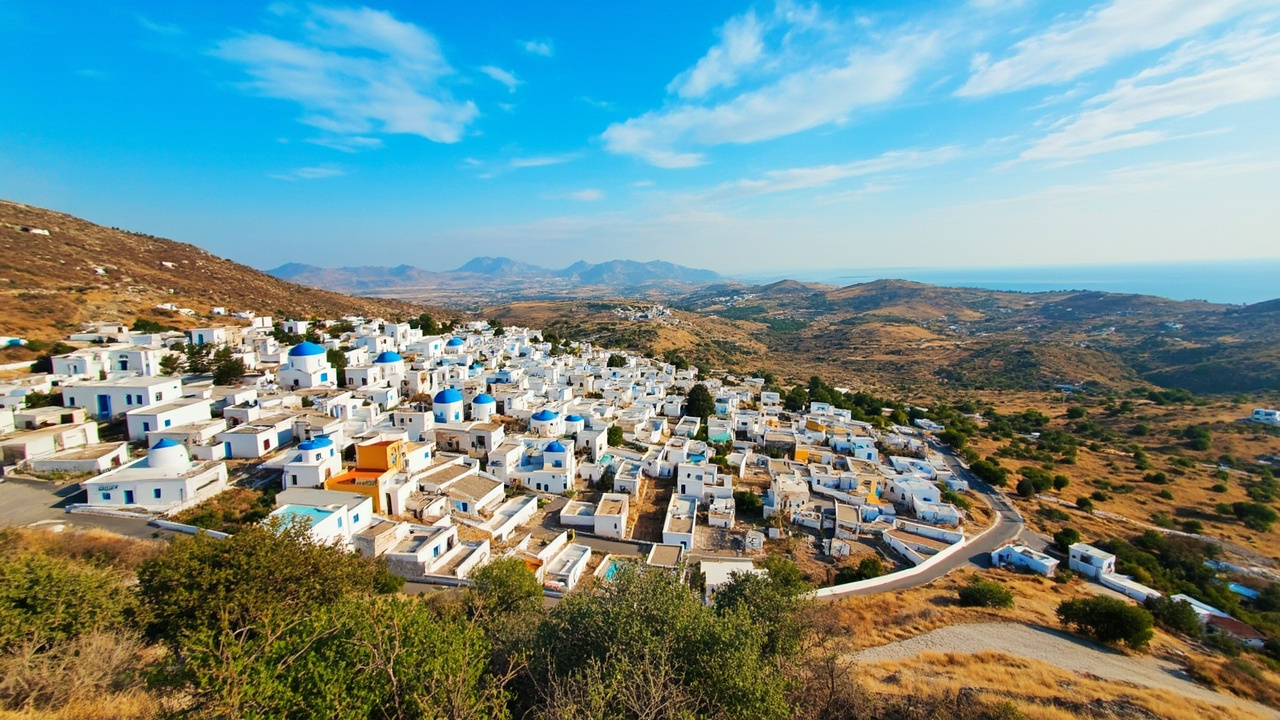
Asfendiou is the first inland village you reach heading west from Kos Town, climbing into the Dikeos foothills. It’s not a tourist village — it’s where Kos locals have lived for centuries, and it has the atmosphere to match. The old stone houses, the tiny church of Agios Ioannis with its frescoes, and the view back over the coastal plain make this a quiet, authentic start to the inland route. There’s a ceramic workshop here (Asfendiou Ceramics) where you can watch traditional Dodecanese pottery being made and buy pieces at half the price you’d pay in Kos Town’s tourist shops.
Zia — km 18
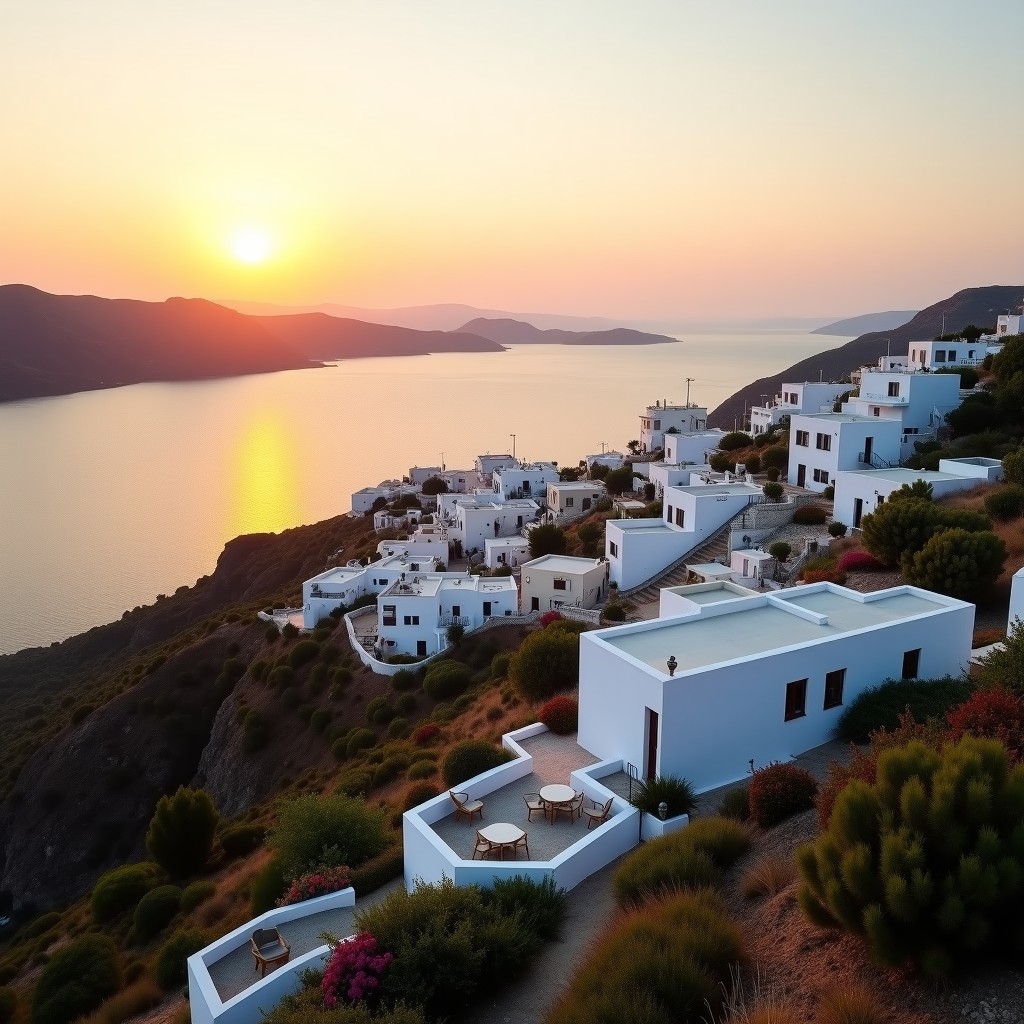
Zia is Kos’s most famous mountain village, perched on the western slopes of Mount Dikeos at about 300 m elevation. The reason everyone comes to Zia is the sunset — it faces west over the sea, and on a clear evening you can see Nisyros volcano and the islands of Kalymnos and Pserimos silhouetted against the setting sun. The village square has several tavernas that serve traditional Kos dishes: tomatokeftedes (tomato fritters), lamb kleftiko, and oven-baked feta with honey and sesame.
Zia gets busy at sunset — tour buses arrive from Kos Town around 6pm. Visit in the morning or early afternoon instead, when the village is almost empty and you can actually talk to the shopkeepers. The walk to the small spring above the village takes 15 minutes and gives you views that the sunset crowds never see because they don’t leave the main square.
Pyli — km 30
Pyli (also spelled Pili) is the largest inland village on Kos and the one that feels most like normal Greek life rather than a visitor attraction. The old village (Paleopyli) sits on a hillside above the modern settlement, with a medieval castle and the ruined church of the Archangel Michael. The new village spreads along the valley, with plane trees shading the central square and an excellent bakery that locals drive from Kos Town to use. The honey sold at small roadside stalls around Pyli is thyme honey from the Dikeos slopes — genuinely local, genuinely good, and about €8 per jar.
Pyli also has the famous “Tombs of the Harmylians” — Mycenaean-era chamber tombs carved into the hillside, accessible by a short marked path from the main road. They’re free to visit and rarely see more than a handful of visitors per day.
Antimachia — km 45
Antimachia sits on the central plateau, halfway between the mountains and the south coast. It’s a quiet village with a well-preserved Venetian castle that offers 360-degree views across the island. The Windmill of Antimachia, a restored traditional stone windmill, sits at the village entrance and is one of the most photographed structures on the island.
Antimachia is also known for its sweet cheese pies (myzithropita) — the bakery near the central square sells them warm in the mornings, and they are genuinely the best pastry on the island. Don’t skip this. From Antimachia, you can detour south to Kardamena (10 km) for a swim before heading back to Kos Town.
Other Inland Stops if You Have More Time
Lagoudi and the Pine Forests
Lagoudi is a tiny hamlet on the eastern slopes of Dikeos, surrounded by Aleppo pine forest. There’s nothing touristy here — no shops, no tavernas. What there is, is silence, a canopy of pine trees, and a rough track that leads up to the Dikeos summit (846 m) if you want a proper mountain walk. The track is unpaved for the last 2 km — fine in a standard car if you go slowly, better in something with higher clearance. The summit view on a clear day takes in the entire Dodecanese chain, the Turkish coast, and Nisyros’s volcanic crater.
Mount Dikeos Summit (846 m)
The highest point on Kos, accessible by a rough road from Lagoudi or Zia. The summit has a small church (Christ the Saviour) and a cluster of communication masts. The real draw is the 360-degree panorama — on a clear day, you can see Kalymnos, Pserimos, Nisyros, and the Turkish Bodrum peninsula. It’s about a 15-minute walk from where the road ends to the very top. Bring wind gear regardless of the temperature at sea level — it’s always windy at the summit.
Driving on Kos: What You Need to Know
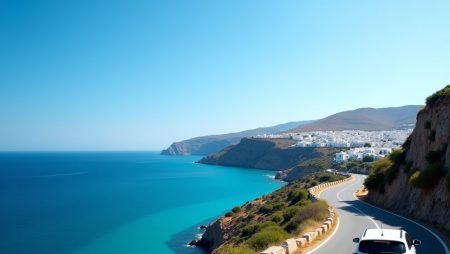
Kos’s inland roads are paved and in reasonable condition. The main roads (Kos Town to Zia, the central road from Antimachia to Kos Town) are wide enough for two cars to pass comfortably. Some secondary roads to the smaller villages are narrower and windier — drive at 30–40 km/h and use your horn on blind corners, which is standard Greek practice. Driving in Greece takes a bit of adjustment if you’re used to Northern European road discipline, but Kos’s roads are less hectic than Athens or Crete.
Parking: Free in all the inland villages. Zia gets crowded at sunset, so arrive early for a spot near the square. Kos Town parking costs €2–3/hour at metered spaces, free outside the centre.
Fuel: Several stations on the main road between Kos Town and the airport. Fuel on Greek islands is pricier than the mainland — expect around €1.85/litre in 2026. Fill up before heading inland as there are no stations in the mountain villages.
Season: The inland route is driveable year-round. Mountain roads above 400 m can be slippery after rain in winter (December–February). Summer is hot — start early morning to avoid the worst of the heat. Spring (April–May) is ideal: valleys are green, wildflowers are out, and the villages are quiet.
Check the selected offer’s full price, included cover, excess, mileage allowance and any charges due locally before booking.
Quick Comparison: Getting Around Kos
| Method | Coverage | Cost | Best For |
|---|---|---|---|
| Rental car | Full island | Check a current full quote | Inland villages, flexibility, early starts |
| Quad bike | Most roads | Check current local quote | Fun, beach access, rough tracks |
| Scooter | Paved roads only | Check current local quote | Couple, light luggage, coastal routes |
| Bus (KTEL) | Kos Town, beaches only | Check current fare | Budget, no inland access |
Related Destinations
Looking for car hire on nearby Greek islands? Also explore Kardamena, Kefalos, and Rhodes.
FAQs
Do you need a car to explore Kos inland?
Yes. Public buses on Kos only serve the main coastal settlements and beaches. The inland villages (Zia, Pyli, Asfendiou, Lagoudi) have no bus service. A rental car is the only practical way to reach them.
Is Zia worth visiting?
Zia is worth visiting for the mountain views, traditional tavernas, and craft shops. Go in the morning or early afternoon when the village is quiet — the sunset crowds (6–8pm in summer) make it feel like a tourist attraction rather than a Greek village.
Can you drive to the top of Mount Dikeos?
Almost. A paved road goes to Lagoudi, then a rough unpaved track continues to about 800 m elevation, near the summit church. A standard rental car can handle it slowly. The final 15-minute walk to the 846 m summit is on foot.
How long does the Kos inland villages drive take?
Allow a full day (6–8 hours) with stops at Asfendiou, Zia, Pyli, and Antimachia, plus a taverna lunch. Pure driving time for the circular route is about 1.5 hours over 65 km.
Are Kos inland roads safe?
Yes — all main roads are paved. Some secondary roads to villages are narrow and winding. Drive at 30–40 km/h on these sections and use your horn on blind corners (standard Greek practice). Winter rain can make mountain roads above 400 m slippery.
Ready to book? Visit our homepage for the best hire car deals.